
TikTok vs Instagram Reels vs YouTube Shorts: Which Platform is Right for You?
Three platforms, three different audiences, three different algorithms. Understanding the nuances of TikTok, Instagram Reels, and YouTube Shorts is essential for maximizing your short-form video strategy.
Quick Comparison Overview
| Feature | TikTok | Reels | Shorts |
|---|---|---|---|
| Max Length | 10 min | 3 min | 3 min |
| Best Length | 15-60 sec | 15-30 sec | 30-60 sec |
| Primary Audience | Gen Z/Millennials | 25-34 year olds | All ages |
| Discovery | For You Page | Explore + Feed | Shorts shelf |
| Algorithm Focus | Watch time, replays | Engagement, saves | Clicks, watch time |
| Best For | Viral reach | Brand building | Channel growth |
| Monetization | Creator Fund | Bonuses (limited) | Revenue sharing |
📱 TikTok: The Viral Discovery Engine
The Platform
TikTok is the original short-form vertical video platform (in its current form), and it still leads in terms of viral potential. The For You Page algorithm is famously effective at surfacing content to interested viewers, regardless of follower count.
Audience
- • Primarily Gen Z and Millennials (60% under 30)
- • Highly engaged, entertainment-focused
- • Open to discovering new creators
- • Trend-conscious and meme-literate
Algorithm Insights
TikTok's algorithm heavily weights:
- • Watch time: How long people watch before scrolling
- • Completion rate: Do viewers watch to the end?
- • Replays: Do people watch it multiple times?
- • Shares: Is it sent to friends?
- • Comments: Does it spark conversation?
Best Content Types
- • Entertainment and humor
- • Trend participation (sounds, challenges)
- • Educational "quick tips"
- • Behind-the-scenes and authentic moments
- • Hot takes and opinions
TikTok is best for:
Maximum reach potential, building awareness with younger audiences, and testing content virality. If you want discovery at scale, TikTok is unmatched.
📸 Instagram Reels: The Brand Builder
The Platform
Instagram Reels is Meta's answer to TikTok, integrated into the broader Instagram ecosystem. This integration is both its strength (access to your existing audience) and limitation (harder to go viral to new audiences).
Audience
- • Slightly older demographic (25-34 core)
- • More curated, aesthetic-conscious
- • Higher income demographics
- • Strong in fashion, beauty, lifestyle, food
Algorithm Insights
Instagram Reels prioritizes:
- • Engagement: Likes, comments, shares within the app
- • Saves: Highly weighted signal of value
- • Existing relationship: Followers see your content first
- • Quality signals: Higher production value helps
Best Content Types
- • Aesthetic, polished content
- • Tutorials and how-tos
- • Product showcases
- • Lifestyle and aspirational content
- • Behind-the-scenes of polished work
Reels is best for:
Brand building, engaging existing audiences, and converting viewers to customers. Higher quality production value is expected and rewarded.
▶️ YouTube Shorts: The Long Game
The Platform
YouTube Shorts lives within the YouTube ecosystem, which gives it unique advantages. Shorts can drive subscribers to your main channel, and YouTube's massive search engine adds discoverability other platforms don't have.
Audience
- • Broadest age demographic of all three
- • More intent-driven (came to YouTube for something)
- • Strong in education, tutorials, tech, gaming
- • Willing to transition to long-form content
Algorithm Insights
YouTube Shorts algorithm focuses on:
- • Click-through: Do viewers choose to watch?
- • Watch time: Percentage of video watched
- • Subscribe conversions: Do viewers subscribe?
- • Engagement: Likes and comments
Best Content Types
- • Educational content and tutorials
- • Clips from longer YouTube videos
- • Tech demos and reviews
- • Gaming highlights
- • Teasers for long-form content
Shorts is best for:
Growing your YouTube channel, reaching intent-driven audiences, and building a long-term content funnel. Shorts viewers can become long-form subscribers.
Which Platform Should You Focus On?
The answer depends on your goals, audience, and content type:
Choose TikTok if...
- • Your target audience is under 35
- • You want maximum potential reach
- • You're comfortable with trends and casual content
- • Brand awareness is your primary goal
Choose Instagram Reels if...
- • You already have an Instagram following
- • Your content is visual/aesthetic
- • You're targeting 25-40 year olds
- • You want to drive commerce/conversions
Choose YouTube Shorts if...
- • You have long-form content to promote
- • Your content is educational or tutorial-based
- • You want to build a subscriber base
- • Long-term channel growth is your goal
The Multi-Platform Approach
Here's the truth: most successful creators don't choose just one. They post to all three platforms, adapting content for each.
The key is understanding that "adapting" doesn't just mean reformatting. It means:
- • Different hook styles for different audiences
- • Adjusted pacing (TikTok = fast, Shorts = can be slower)
- • Platform-native features (trending sounds on TikTok, etc.)
- • Caption style and hashtag strategy differences
Pro tip:
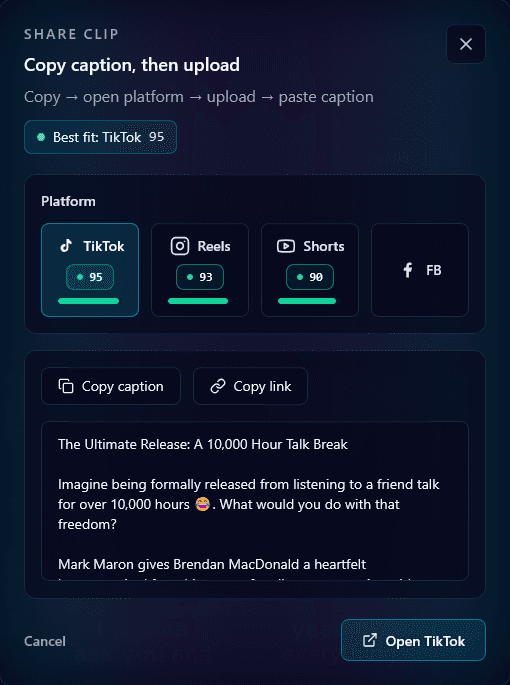
Use tools like Klypse that score clips for each platform separately. A clip that's perfect for TikTok might need adjustment for YouTube Shorts. Platform-specific optimization makes a real difference.
Start Where Your Audience Is
There's no universally "best" platform – only the best platform for your specific goals and audience. If you're unsure, start with the platform where you already have some presence, then expand to others as you learn what works.
The one constant across all three: short-form vertical video is essential for growth in 2026. Whether you go all-in on one platform or distribute across all three, the format is here to stay. The fastest way to get started is to turn videos into shorts from your existing long-form content using an AI video editor.
Related Reading
Optimize Clips for Every Platform
Klypse scores clips for TikTok, Reels, and Shorts separately, showing you which content will perform best where.